This story is part of our Stories of Impact series, spotlighting our Fellows who, through socially engaged arts, work with communities across Europe to confront the past, respond to present challenges, and co-create futures grounded in care, solidarity, and collective thriving. Here, Stefano reflects on how socially engaged arts can move beyond cultural spaces, transforming art from something to be consumed into a shared process that supports communities and institutions to shape change in the real world.
In Bruno Munari’s conception, art represents a bridge between a child’s imagination and an adult’s sense of reality. Starting from this idea, I began to ask myself how art can be brought into everyday life—how to break the cultural sector’s self-referentiality and transform art from a “product to be consumed” into a “continuous participatory process” capable of generating concrete impact within real contexts.
Karakorum is the organisation through which I try to tackle these issues every day. In dialogue with other value-producing sectors (social impact, urban regeneration, innovation, environmental protection), we co-create artistic projects and products that bring art into direct contact with the forces shaping and transforming the context in which we live in Varese, Italy.
To be honest, I didn’t always think I would become an artist. I was a young street educator, trying to hold back my group of teenagers—misplaced, angry and in constant conflict with the world—from attacking an elderly fisherman who had caught a duck on his hook. My colleague and I tried to slow everything down: to save the animal, calm the boys, and keep a conflict between generations from exploding in a public space. We failed. My colleague was beaten. Stones were thrown. The duck did not survive. That afternoon, I found myself facing, all at once, many of the challenges of the contemporary world: youth marginalisation, intergenerational tension, a fragile ecosystem, and the speed at which situations can escalate when there is no shared framework to hold them. In that moment, I realised that no single, linear response could hold all of this together. That’s why I decided to become an artist.
I strongly believe these grand challenges are too complex to be addressed in a linear—or vertical—way. And this is precisely where only art can make a difference. It does not focus on a single, specific problem (as we tried to do that afternoon by the river): it dwells in complexity, imagines alternative scenarios, and steps outside both literal and figurative places of culture. It’s a tool to train society to inhabit failure, error, fragility, and “non-functionality,” making it the cornerstone of otherwise impossible change. This gives it the unique potential to trigger the systemic transformation the world needs today.
The major, interconnected sustainability challenges we face globally manifest differently in each local context. For this reason, at Karakorum we work from within specific territories and ecosystems, engaging with their communities, institutions, and everyday practices.
In these contexts, the first obstacle to change is always cultural: it emerges from fear, individual emotions, habits, the meanings we assign to things, and personal histories.
Our processes are designed to create conditions for dialogue and confrontation—spaces where new shared meanings can emerge and, from there, transform practices. To do this, we work simultaneously with people on the margins, institutions, scientists, businesses, and universities. Centring the community means transforming art into a common ground where these often distant worlds work together to tackle a common problem. Art allows us to act precisely at this level, through what we call art and culture-based solutions.
This is what happened with TERRA RARA. The project addressed a hidden but widespread form of inertia: the tendency to keep old electronic devices in our drawers, not only because disposing of them is inconvenient, but because these objects are often bound up with memories, attachments and personal histories. Yet these devices are not simply waste: they contain valuable materials and critical resources that need to be recovered and brought back into circulation. TERRA RARA used art to work on this emotional and cultural resistance. By transforming discarded devices into the material for a public artwork, it turned disposal into a meaningful collective gesture. Beauty became a way to overcome inertia and to build a new cultural meaning around letting go — not as loss, but as participation in a shared ecological responsibility.
In this sense, the project did not just raise awareness. It helped activate concrete practices of collection and participation, while also contributing to a shift in the local system: the municipality of Varese later revised its electronic waste collection practices to improve performance.
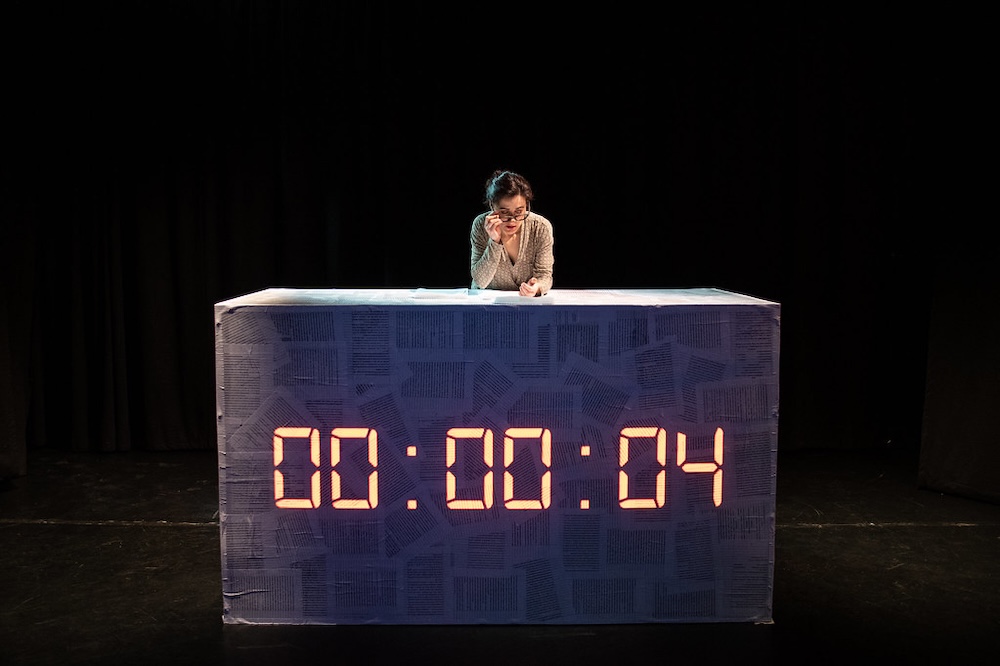
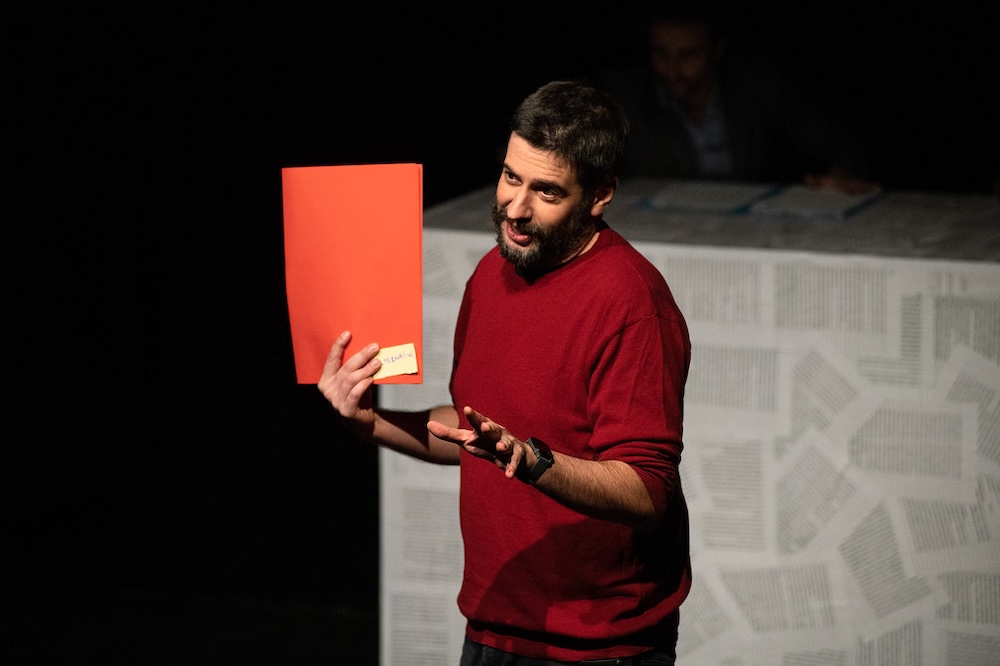
Another example is GLI ERRORI DEGLI ALTRI. In public institutions, anti-corruption is often approached mainly as a matter of rules, compliance, and risk prevention. Yet the real obstacle is also cultural: it lies in fear of making mistakes, in defensive organisational habits, in the difficulty of speaking openly about responsibility, pressure, and fragility within the workplace. With GLI ERRORI DEGLI ALTRI, we used a playful performative format to shift this perspective. Performance created a space in which participants could engage with these issues in a less rigid and more human way, lowering defences and making room for dialogue, reflection, and recognition.
In this sense, the project did not simply deliver training content. It helped create new conditions for people within public administration to reflect together on how their institutions function, and on how wellbeing, trust, and integrity are deeply connected. The project led to the emergence of a small network of municipal secretaries who are now experimenting with new practices focused on employee wellbeing, showing that public administration can improve not only through stricter procedures, but by placing people at its centre.
In both cases, the artwork itself is only one part of the process. What matters is what it enables — new relationships, new understandings, and shifts in how systems operate. This is precisely what I hope for the future: to see socially engaged artists sitting at the table on equal footing with other disciplines, not at their service. In a scenario where challenges seem impossible, it is fundamental to restore dignity to imagination, empathy, and fragility. As Munari said, it is by bringing beauty back into the things, practices, and processes of our daily lives that we can truly change the world – and change it for everyone, leaving no one behind: boys, fishermen, and ducks.
Explore more stories of socially engaged arts driving change across Europe. View the Stories of Impact map here.