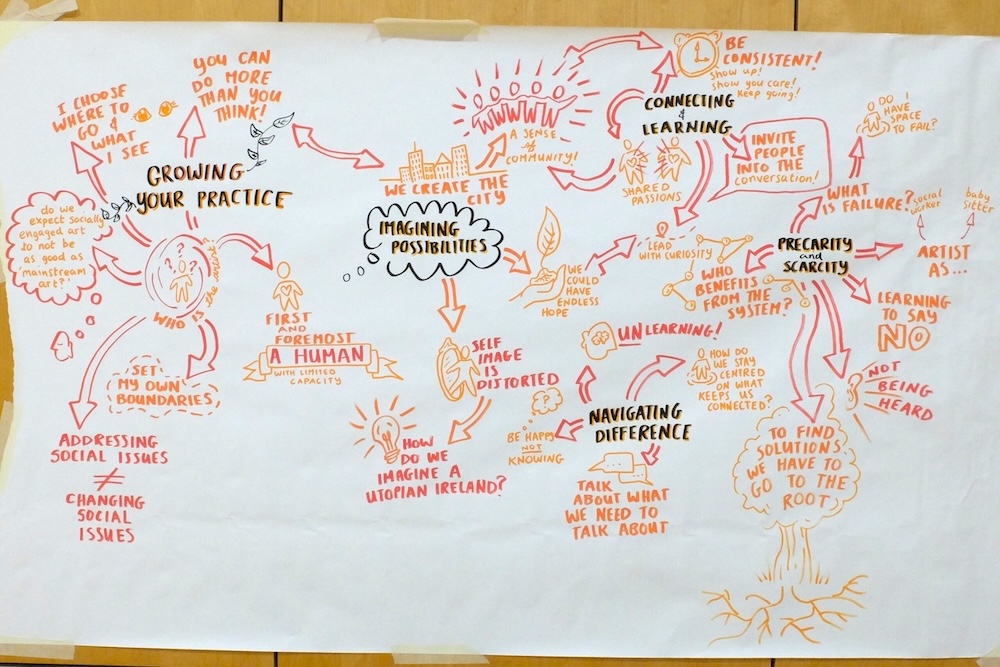
This story is part of our Stories of Impact series, spotlighting our Fellows who, through socially engaged arts, work with communities across Europe to confront the past, respond to present challenges, and co-create futures grounded in care, solidarity, and collective thriving. Here, Damien explores the multi-faceted ways his organisation takes on social change, from quiet support to forthright advocacy.
Throughout my career, I’ve worked hard to bring culture and communities closer together and address structural inequalities in our society. And in that time, I’ve witnessed first-hand the potential for socially engaged arts to build a platform for real social change.
This path ultimately led me to Create, Ireland’s national development agency for collaborative arts. Our mission is to enable artists and communities to make art that engages with urgent social, cultural, and political issues. We do this by offering professional development, mentoring, commissioning, and project opportunities, as well as through research and training. We also champion diversity, connect practice to policy, and advocate for the cultural value of collaborative arts.
Our work involves collaborations on residencies and commissions with local, national, and international organisations. We’ve worked closely with the National College of Art and Design to roll out modules, courses, and PhD studentships in socially engaged arts, and we’ve piloted place-based programmes with Dublin’s North East Inner City and Creative Places Tuam, offering artists and community groups funding and career development opportunities. And through our Summer School programme – which has convened over a hundred artists, activists and thinkers – we’ve helped artists secure funding for awards, bursaries, and residencies, and develop their practice both individually and collectively.
Create supports the wider ecosystem in which this kind of work can emerge and be sustained. In different moments, we act as a funder, a partner, a supporter or critical friend on the journey.
One example of this is Our Place, a project developed by artists Alan James Burns and Sinéad McCann in collaboration with St John of God Community Services for adults with intellectual disabilities. Initially supported through Create’s Artist in the Community Scheme, the project has since expanded nationally with further backing from Rethink Ireland’s Disability Participation and Awareness Fund—recognising its co-creative approach and emphasis on power-sharing.
Working with co-artists, the project has created and presented a multi-sensory installation in galleries, arts centres and festivals across Ireland. The work explores themes of happiness, human rights and belonging through immersive and accessible design—including sound artworks played through multiple speakers, tactile and light-based elements, and integrated access features such as Lámh sign language video, braille, audio and captioned descriptions. Inclusive practice is embedded throughout: co-artists are paid for their work, accessible contracts are developed, and exhibition processes are adapted to support full participation. Alongside this, Create has contributed as a research and advocacy partner, helping to develop the methodology and share learning across the sector. As the work has grown, it has not only increased access to cultural expression, but also exposed the structural barriers that exist within the arts and the systems that shape access and participation for people with intellectual disabilities—and demonstrated practical ways these can be addressed.
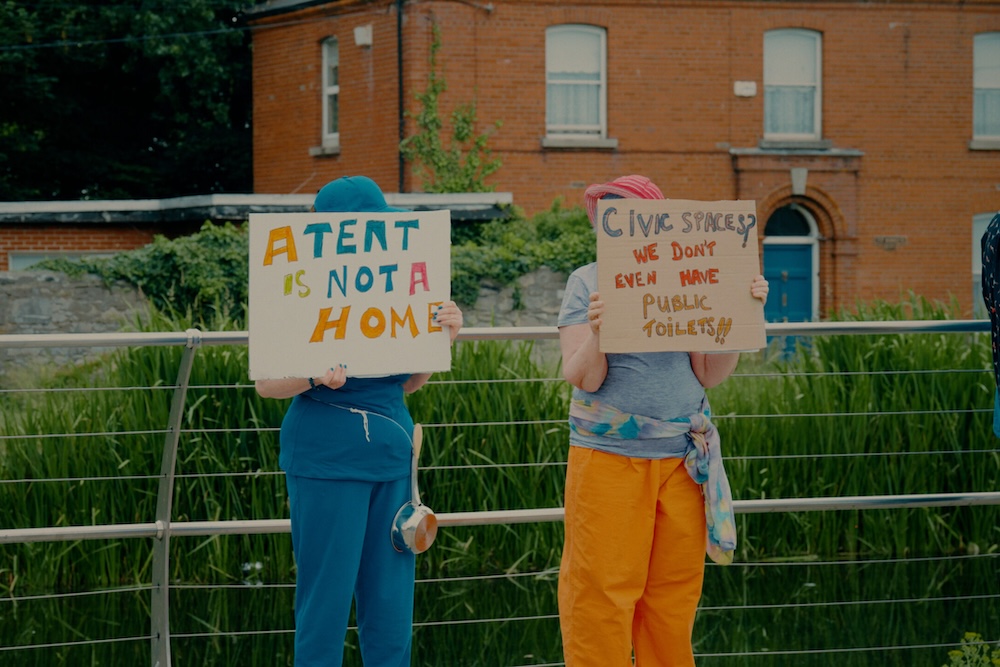
Another example is Multi-Story – Creative Engagement for Housing Change, led by artists Feidlim Cannon and Fiona Whelan alongside Housing Action Now. This work brought together housing activists and communities to explore the failures of the Irish housing system through creative process. In 2022, Act I: The Apology was presented at a major gathering, where it opened up space for public reflection on housing policy. The script was later read into the Seanad, marking a significant moment in how artistic work can intersect with national political discourse. These examples show how our organisation has helped artists and communities to deliver work that can have an influence in other contexts such as the political sphere or the working practices of service providers in the disability sector.
Socially engaged arts can play an important role in opening up space for the social and political issues that shape people’s everyday lives. At Create, much of our work is about supporting this practice to develop — working alongside artists and communities, and helping to build the conditions in which meaningful collaboration can take place. We are proud to contribute to this ecosystem, and see ongoing potential to strengthen the capacity of the sector so that this work can continue to evolve and respond to the challenges of our time.
Explore more stories of socially engaged arts driving change across Europe. View the Stories of Impact map here.